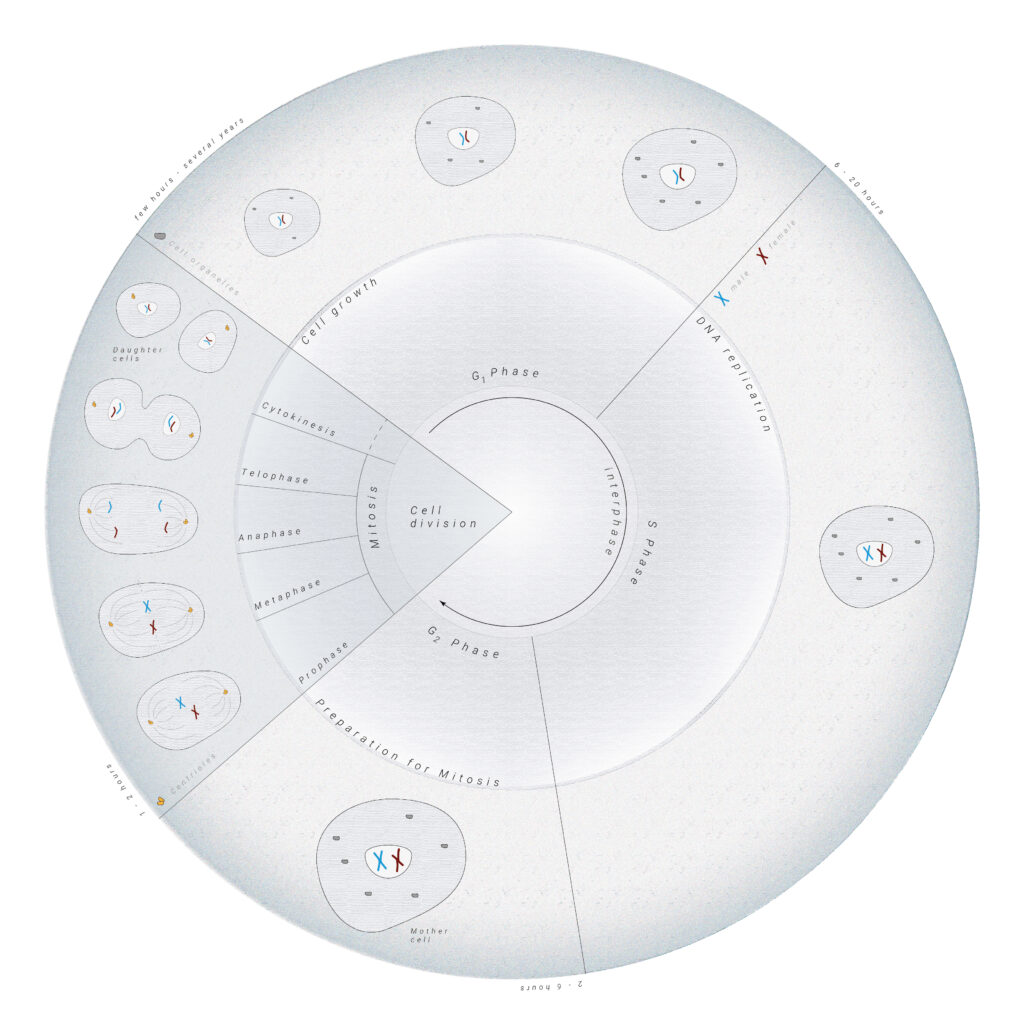
The attached infographic illustrates one of the most fundamental processes of life: cell division. Every second, throughout the human body, cells divide to produce new cells. Cell division is a defining characteristic of living organisms. Each of us began as a single fertilized cell, yet the adult human body is composed of trillions of cells.
There are two primary types of cell division. Mitosis occurs in somatic cells, which form most tissues and organs such as skin, muscles, lungs, and intestines. Meiosis occurs in germ cells within the reproductive organs. The sequence of events through which a cell grows and divides is known as the cell cycle. A dividing cell is referred to as a “mother cell,” and the newly formed cells are called “daughter cells.” These daughter cells grow and may themselves become mother cells. Cell division is tightly regulated. Cells communicate through chemical signals, particularly proteins known as cyclins, which control progression through the cell cycle. Certain cyclins stimulate division, while others inhibit it, ensuring coordinated growth and balance within tissues.
Working with biomaterials means engaging with regenerative living processes. Unlike extractive production systems, living matter grows through self-division, requiring only basic inputs such as carbohydrates, light, and minimal energy. If growth can occur through simple, self-regulated biological mechanisms, how might this reshape our understanding of production, material cultivation, and the meaning of growth itself?