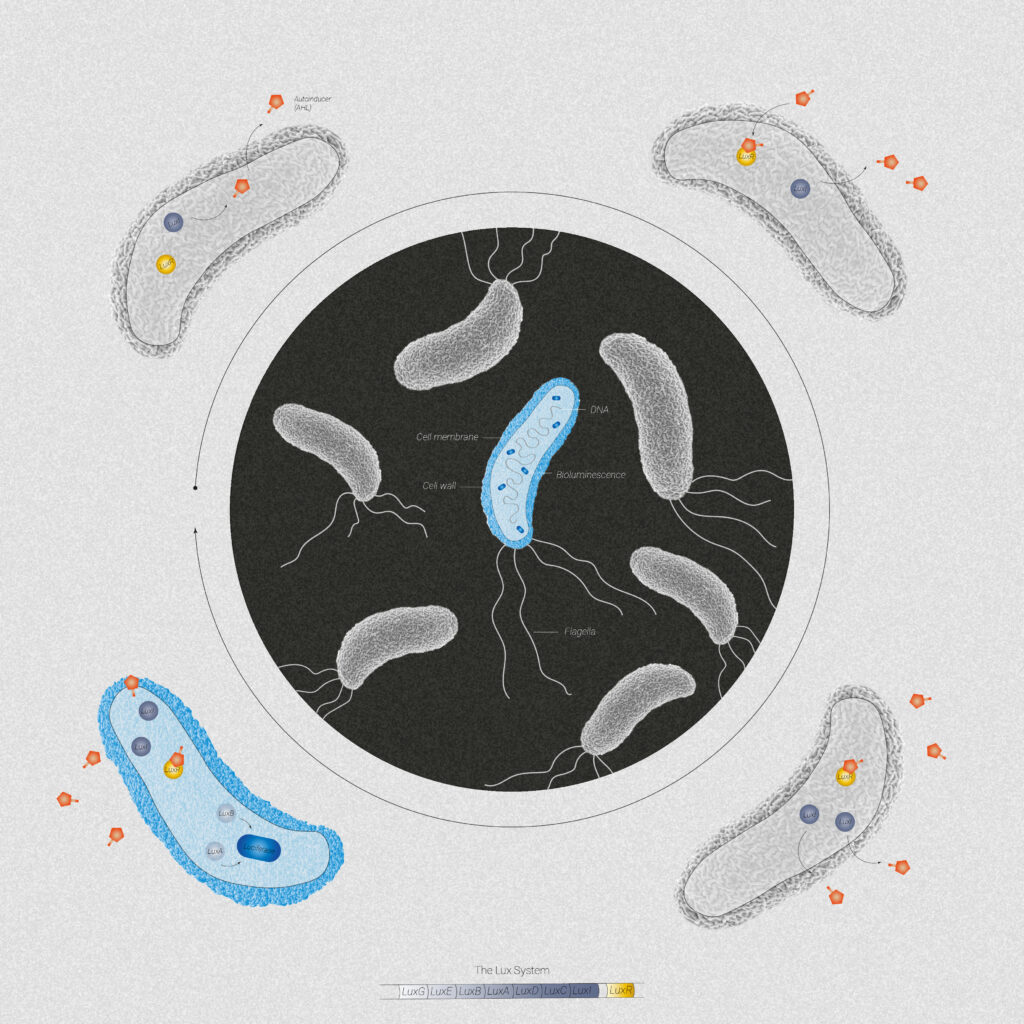
The attached infographic illustrates the biological mechanism behind bioluminescence in Aliivibrio fischeri, highlighting how light production is regulated at the cellular level.
Aliivibrio fischeri is a single-celled, Gram-negative marine bacterium capable of bioluminescence. Heterotrophic and motile, it moves using a single polar flagellum. Some colonies float freely in the ocean, feeding on decomposing organic matter. More commonly, however, this bacterium forms symbiotic relationships with marine hosts.
Many marine organisms harbor bioluminescent bacteria to attract mates, deter predators, lure prey, or communicate. In return, the host provides the bacteria with a nutrient-rich and protected environment.
The bioluminescence of A. fischeri is regulated by the transcription of the lux operon, a cluster of seven structural genes (luxCDABEGH). This system is activated through population-dependent quorum sensing. Only when the bacterial population reaches a critical density is the lux system triggered, initiating light production.
If light emerges only through collective density and communication, how might this inform the way we design luminous materials and environments?