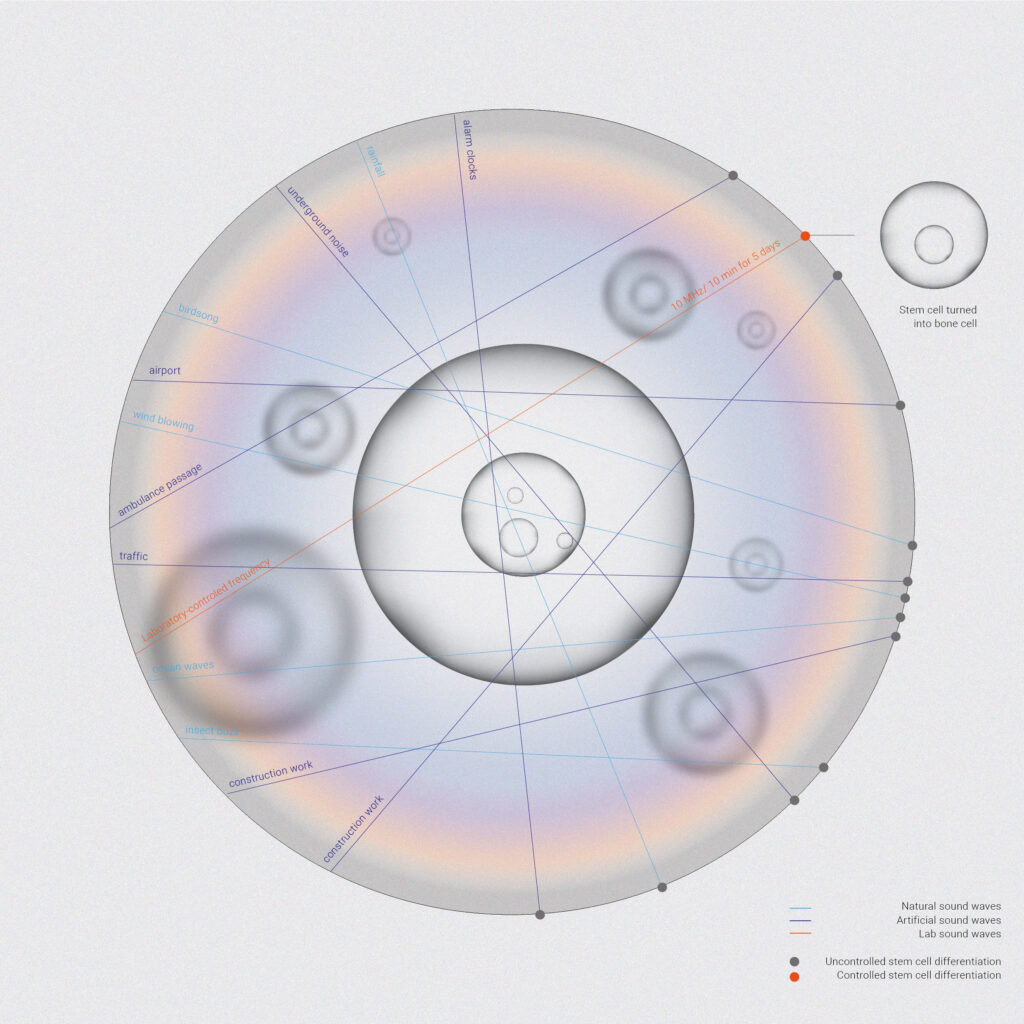
Stem cells are undifferentiated cells from which specialised cells develop. They function as the body’s foundational biological material. Under appropriate conditions, whether in the body or in laboratory settings, stem cells divide to produce daughter cells. These daughter cells either remain stem cells (self-renewal) or differentiate into specialised cells with specific functions.
Several scientific studies have shown that mechanical stimuli, including sound waves, can influence cellular behaviour and differentiation. In 2022, researchers in Australia demonstrated that high-frequency sound waves (10 MHz, applied for 10 minutes per day over five days) could encourage stem cells to develop into bone cells. The treated cells showed increased expression of markers associated with bone formation.
As research continues to explore how physical stimuli such as sound interact with biological systems, it opens up broader questions about how environmental factors may influence cellular processes during development. Further investigation in this field may contribute to a deeper understanding of complex biological mechanisms.